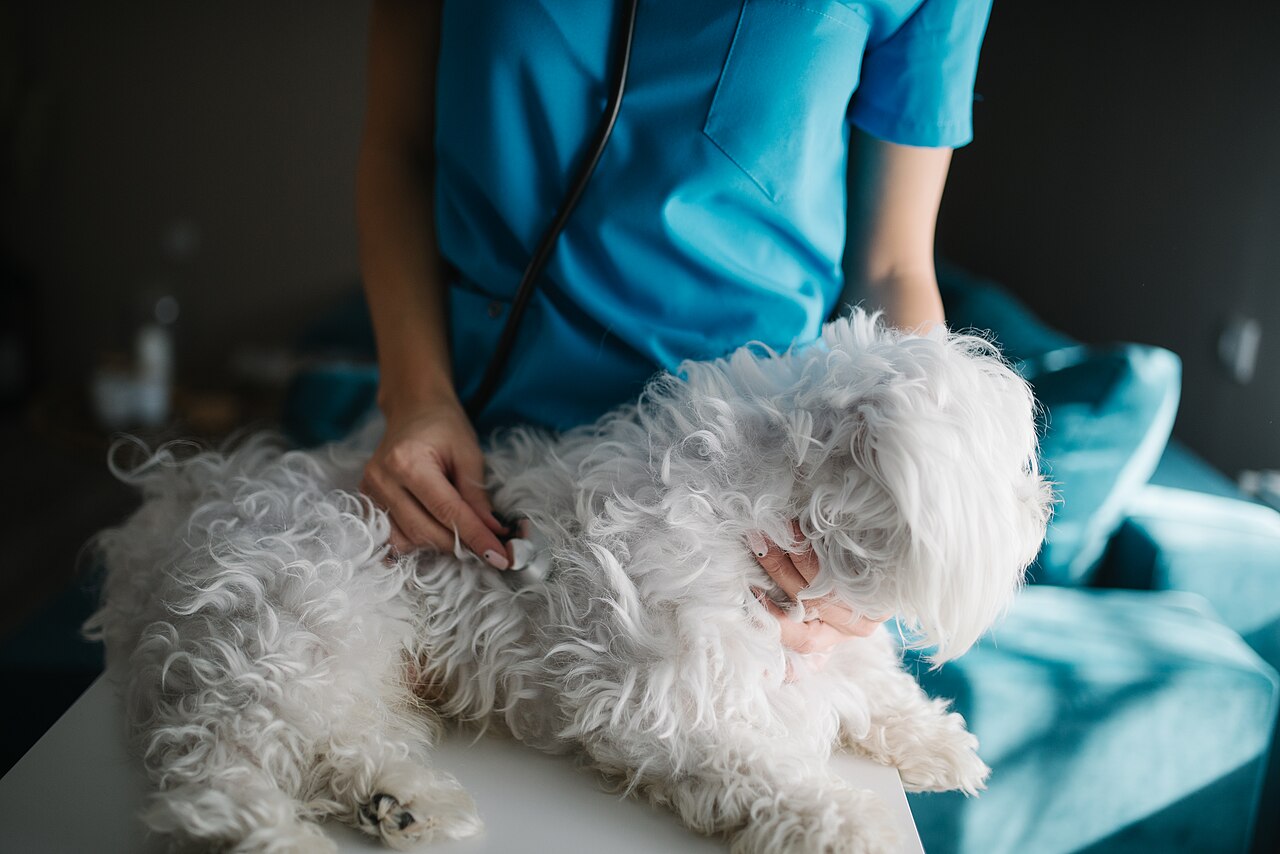

If your dog has just been diagnosed with lymphoma, or you are the veterinarian helping an owner weigh options, this page lists the canine lymphoma clinical trials labeled recruiting in the VetTrials trial database snapshot checked November 3, 2026. There are ten: treatment studies (including two CAR-T cell studies, a BTK inhibitor and a virus-based therapy), studies that collect samples while dogs receive standard chemotherapy, and two screening studies, one of which is only for healthy dogs.
Read the entries, note the ones that match your dog's lymphoma type and treatment history, and take them to your veterinarian or a board-certified veterinary oncologist. Timing matters: several studies only accept dogs that have not started chemotherapy or steroids yet. You can also run the live lymphoma trial search for the newest listings.
Why B-cell or T-cell matters for which canine lymphoma clinical trials fit
Lymphoma is a cancer of lymphocytes, a type of immune cell, and of lymphoid tissues such as lymph nodes, spleen and bone marrow. Penn Vet's oncology service calls it one of the most common cancers diagnosed in dogs, and notes that the multicentric form, which involves the external lymph nodes, is the most common (Penn Vet). Often the only sign an owner notices is swollen lymph nodes under the neck, in front of the shoulders or behind the knees (Penn Vet).
Canine lymphoma is grouped by the type of lymphocyte it comes from: B-cell or T-cell (Merck Veterinary Manual). A test on the tumor sample, often flow cytometry or a PCR test called PARR, sorts out which one your dog has (Merck Veterinary Manual; Penn Vet). This label, called the immunophenotype, matters for trials. Most of the treatment studies below are written for B-cell lymphoma, and some go further and require large-cell or high-grade disease. One study is specifically for T-cell lymphoma, and the virus-based study accepts aggressive lymphoma of either type. Published sources describe the outlook as generally different between the two types (Merck Veterinary Manual), and one of the listed studies exists because T-cell outcomes vary more than once thought (Ontario Veterinary College).
Trials also use staging. The World Health Organization system runs from stage I (a single lymph node or one organ's lymphoid tissue) to stage V (blood, bone marrow or other organ involvement), with a substage "b" for dogs that are sick from the disease, for example with fever or weight loss (Merck Veterinary Manual). Some studies below set limits on stage, substage or the number of enlarged nodes.
How canine lymphoma is usually treated
Chemotherapy is the mainstay of treatment because lymphoma is a whole-body disease (Penn Vet). The most common combination is a CHOP-based protocol: cyclophosphamide, hydroxydaunorubicin (doxorubicin), vincristine and prednisone, sometimes with L-asparaginase added (Merck Veterinary Manual). Penn Vet describes these drugs being given on a weekly basis for several months, and notes that single-agent protocols can be used when medical, practical or financial limits apply (Penn Vet).
Penn Vet is also clear about what treatment usually achieves: most dogs on a CHOP protocol go into remission, a remission is the temporary disappearance of detectable cancer rather than a cure, and most dogs relapse at some point (Penn Vet). For cost questions about standard chemotherapy, see our guide to what dog chemotherapy costs.
Timing: prior treatment can affect eligibility
The detail that most often decides eligibility is what treatment a dog has already had. Among the studies on this page, the Georgia study excludes dogs that have had prior lymphoma treatment or more than 14 days of prednisone (University of Georgia). The Iowa State screening study excludes dogs with prior prednisone, chemotherapy or immunotherapy (Iowa State University). The Guelph T-cell study requires no previous steroids or chemotherapy (Ontario Veterinary College). Cornell's study allows prior prednisolone only (Cornell University). The Minnesota CAR-T study restricts prednisone and several immune-modifying drugs (University of Minnesota).
Prednisone on its own can improve quality of life for a time (Merck Veterinary Manual), so the question of whether to start it can come up within days of a diagnosis. If a trial is something you want to consider, raise it with your veterinarian before any treatment begins, so the decision about steroids is made with the trial rules in view. This is a conversation for your veterinarian or a board-certified veterinary oncologist; only they can weigh it against your dog's condition.
Lymphoma trials listed as recruiting (checked November 3, 2026)
Each study below is listed as recruiting per the VetTrials trial database, checked November 3, 2026. That database label is not confirmation that the institution is currently enrolling. Status and details can change at any time, so confirm with the institution before planning around one. VetTrials is an independent listing site, not the enrolling institution, and is not affiliated with AVMA's Veterinary Clinical Trials Registry or with any of the universities listed. See About VetTrials for how listings work.
Treatment studies for B-cell lymphoma
LEAH xCAR-T: Canine B-Cell Lymphoma
University of Missouri, Columbia, MO. A CAR-T cell study for dogs with large cell B-cell lymphoma. This study uses xenogeneic CAR-T cells, rather than cells made from the patient’s own blood, along with lymphodepleting chemotherapy (University of Missouri). The listing describes dogs over 10 kg with newly diagnosed or relapsed disease that are clinically well, meet bloodwork requirements, have no primary gastrointestinal or lung involvement, and are not receiving immunomodulatory drugs. Cost coverage noted in the listing: full. Confirm with the study team. Institution page
CAR-T cell therapy for canines with B-cell lymphoma
University of Minnesota, Saint Paul, MN. A pilot study, sponsored by LEAH Labs according to the institution's page, checking the safety of a CAR-T cell therapy in dogs with CD20-positive B-cell lymphoma. The institution's page lists dogs of at least 10 kg (any breed except boxers) with multicentric lymphoma, at least four measurable peripheral lymph nodes, new or relapsed disease, and substage a only (University of Minnesota). Cost coverage noted in the listing: not stated. Confirm with the study team. The institution's page describes the study as fully funded for the outlined visits. Institution page
Bruton's Tyrosine Kinase Inhibitor (BI705564) for Canine B-Cell Lymphoma
University of Missouri, Columbia, MO. Tests BI705564, an investigational drug that blocks Bruton's tyrosine kinase, a key signaling molecule in the B-cell receptor pathway that helps drive growth and survival of B-cell lymphoma cells (Harrington et al., PLoS One). The listing describes dogs older than 1 year, 10 to 50 kg, with newly diagnosed, untreated B-cell lymphoma confirmed with immunophenotyping, at least two peripheral lymph nodes of 2 cm or more, and WHO stage II to IV disease. Cost coverage noted in the listing: full. Confirm with the study team. Institution page
Dogs diagnosed with B-cell lymphoma
University of Georgia, Athens, GA. An exploratory field study of an investigational veterinary product (not named on the listing) for large B-cell lymphoma. The institution's page lists newly diagnosed, untreated dogs that are 10 to 50 kg and over 12 months old, and excludes prior lymphoma treatment and more than 14 days of prednisone (University of Georgia). Cost coverage noted in the listing: not stated. Confirm with the study team. The institution's page says screening, follow-up visits and the product are provided as part of the study. Institution page
Smart-Start Therapy for Canine B-Cell Lymphoma
Cornell University, Ithaca, NY. Dogs receive a short pre-treatment drug matched to their tumor's biology, then standard CHOP chemotherapy; there is no placebo. The institution's page lists dogs seen at the Cornell University Hospital for Animals with B-cell lymphoma, no prior treatment other than prednisolone, and owners willing to pursue standard chemotherapy (Cornell University). Cost coverage noted in the listing: not stated. Confirm with the study team. The institution's page describes a contribution toward chemotherapy costs; it did not state an enrollment status when we checked. Institution page
Treatment study for aggressive B-cell or T-cell lymphoma
ORBIT - VSV and an anti-PD-1 inhibitor for Canine Lymphoma
University of Minnesota, Saint Paul, MN. A phase 2 study combining a genetically modified vesicular stomatitis virus with an anti-PD-1 checkpoint inhibitor (University of Minnesota). Oncolytic viruses are viruses that replicate preferentially in tumor cells (Frontiers in Cell and Developmental Biology), and checkpoint inhibitors block an "off" signal so T cells can attack cancer cells (National Cancer Institute). The institution's page lists dogs with aggressive B-cell or T-cell lymphoma that are untreated or stopped chemotherapy because of resistance, relapse or severe side effects, weigh at least 7.5 kg, are spayed or neutered, and can be kept away from livestock and horses for several days after treatment (University of Minnesota). Cost coverage noted in the listing: not stated. Confirm with the study team. The institution's page says owners pay for initial screening tests and study visits and treatments are covered after enrollment, subject to the study’s stated funding cap. Institution page
Studies that collect samples or data during standard treatment
These studies do not test a new treatment. Dogs receive standard care, and the study collects samples or information to learn more about the disease.
Pilot Study Evaluating the Microbiota in Dogs with Lymphoma
Oregon State University, Corvallis, OR. Studies the bacteria living in and on dogs (nasal, oral and rectal swabs) before and during chemotherapy, and whether changes relate to side effects or response. Dogs receive either a CHOP protocol or single-agent doxorubicin (Oregon State University). The listing describes dogs with newly diagnosed multicentric lymphoma, at least 1 year old and 15 kg, otherwise healthy. Cost coverage noted in the listing: partial. Confirm with the study team. Institution page
Evaluating the Clinical Outcome of Dogs Diagnosed with T-cell Lymphoma
Ontario Veterinary College, University of Guelph, Guelph, ON (Canada). A study aimed at more accurate prognosis for T-cell lymphoma. If T-cell lymphoma is confirmed, an extra needle-core lymph node biopsy is taken under sedation (Ontario Veterinary College). The institution requires confirmed T-cell lymphoma with no previous steroids or chemotherapy. Cost coverage noted in the listing: not stated. Confirm with the study team. The institution's page says the study covers the biopsy costs; it did not state an enrollment status when we checked. Institution page
Screening studies, including one for healthy dogs
LYRA 3 - blood collection study for lymphoma in healthy dogs at least 5 years old
University of Minnesota, Saint Paul, MN. This study is for healthy dogs, not dogs with lymphoma. It collects blood to help build a test that could flag dogs at high risk of diffuse large B-cell lymphoma; no treatment is offered. The institution's page lists dogs at least 5 years old with no history of cancer, living in the contiguous United States, with samples drawn at your own veterinarian's clinic and health surveys every 6 months (University of Minnesota). Cost coverage noted in the listing: not stated. Confirm with the study team. The institution's page says the kit and shipping are covered and office visit costs are the owner's. Institution page
Cerumen as a Biomatrix for Canine Lymphoma Screening
Iowa State University, Ames, IA. A screening research study comparing earwax (cerumen) from healthy dogs and dogs with multicentric lymphoma, collected with ear swabs. It enrolls both healthy dogs and untreated dogs with lymphoma; no treatment is offered (Iowa State University). Cost coverage noted in the listing: not stated. Confirm with the study team. Institution page
What "recruiting" means on this page
"Recruiting" on this page means recruiting per the VetTrials trial database, checked November 3, 2026. It does not establish the institution's current enrollment status. It is not a promise that a spot is open today or that your dog qualifies. Studies fill, pause and close, and some institution pages do not show a status at all. The study team decides eligibility after its own screening, which may include tests at your expense. Treat every entry as a reason to ask, then confirm directly with the institution and with your veterinarian.
What joining a trial can involve
Trials sponsored through the National Cancer Institute's comparative oncology program are reviewed for animal welfare and scientific merit, often offer substantial financial support, and do not prevent a dog from receiving conventional treatment after the study ends (National Cancer Institute). Individual studies differ widely, though. The Minnesota CAR-T study, for example, involves a screening visit, several days of pre-treatment, an overnight stay and follow-up visits over about three months (University of Minnesota). Others need little more than a blood draw or an ear swab. Travel, visit frequency and which costs fall to you vary by study, so ask early. Our broader guide to dog cancer clinical trials covers the general process.
Questions to ask the study team
- Is the study still enrolling, and how soon would my dog need to start?
- Does my dog's lymphoma type, stage and treatment history (including any prednisone) fit?
- What does screening involve, and who pays for it if my dog does not qualify?
- How many visits are needed, how long do they last, and are overnight stays expected?
- Which costs are covered, which are mine, and what happens if side effects need care?
- Can my dog receive standard chemotherapy during or after the study?
- Can my regular veterinarian handle any visits or samples?
- Who do I call with questions after hours?
Sources
- Lymphoma in Dogs, Merck Veterinary Manual
- Information for Oncology Clients: Lymphoma in Dogs, Penn Vet Ryan Veterinary Hospital
- Helping Dogs and Humans with Cancer, National Cancer Institute
- CAR-T cell therapy for canines with B-cell lymphoma, University of Minnesota
- ORBIT: VSV and an anti-PD-1 inhibitor, University of Minnesota
- LYRA 3 blood collection study, University of Minnesota
- Smart-Start Therapy for Canine B-Cell Lymphoma, Cornell University
- Dogs diagnosed with B-cell lymphoma, University of Georgia
- Prognostication of Canine T-cell Lymphoma, Ontario Veterinary College
- CAR T Cells: Engineering Patients' Immune Cells to Treat Their Cancers, National Cancer Institute
- Immune Checkpoint Inhibitors, National Cancer Institute
- Preclinical Evaluation of the Novel BTK Inhibitor Acalabrutinib in Canine Models of B-Cell Non-Hodgkin Lymphoma, PLoS One
- Oncolytic Virotherapy: From Bench to Bedside, Frontiers in Cell and Developmental Biology
- Cerumen as a Biomatrix for Canine Lymphoma Screening, Iowa State University
- Oncology Clinical Trials, Oregon State University